

Variable Stars Group
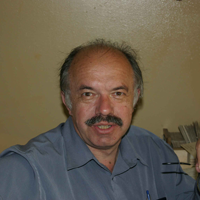 Head of group Full Dr., doctorSamus
|
MAIN FIELDS OF RESEARCH
Stars exhibiting variations of brightness, spectrum, or other characteristics are of a special interest for astrophysics. INASAN is engaged in a large-scale project, compilation of the General Catalogue of Variable Stars (GCVS), jointly with the Moscow University’s Sternberg Astronomical Institute (SAI MSU). The project covers all kinds of variable stars, but INASAN pays special attention to several types, such as Cepheids, cataclysmic variable stars, red giants,
GENERAL CATALOGUE OF VARIABLE STARS
Before the World War II, catalogs of variable stars were regularly compiled in Germany, Then, the Executive Committee of the International Astronomical Union decided to make this important work the responsibility of the USSR.
The project was joined by two teams already experienced in variable-star studies, that in the Astronomical Council of the USSR Academy of Sciences, leaded by B.V. Kukarkin (1909–1977), and that in the Moscow State University, headed by P.P. Parenago (1906–1960). This cooperation still exists. Currently, the team of the General Catalogue of Variable Stars (GCVS) in the INASAN Department of Non-stationary Stars and Stellar Evolution cooperates with the variable-star group in the Department of Studies of the Galaxy and Variable Stars of the SAI MSU.
In 1985–1995, the editorial houses “Nauka” and “Kosmosinform” published the fourth, five-volume GCVS edition. Further on, the catalog is supported and updated in the electronic form (http://www.sai,msu.su/gcvs),
The GCVS includes only variable stars studied in sufficient detail. Stars studied not so well enter catalogs of suspected variable stars. The GCVS team regularly publishes Name-lists of Variable Stars.
In the recent years, the team completed the large work aimed at improvement of coordinates for all GCVS stars; it required checks of identification for tens of thousands of stars using their finding charts. It is now possible to automatically identify numerous variable stars discovered in automatic sky surveys with the GCVS. The team now faces the task to develop effective methods of automatic classification of variable stars from sets of photometric observations. The information of the GCVS should be most completely incorporated into the systems of Russian and International Virtual Observatories.
In 2025, the GCVS team resumed publication of the journal “Peremennye Zvezdy / Variable Stars” founded by B.V. Kukarkin as early as in 1928, Now the journal is published electronically and in English.
CEPHEIDS
The GCVS team is actively engaged in studies of Cepheids, members of an important type of pulsating variable stars/ N.A. Gorynya performs observational studies of Cepheid radial velocities. The velocity of the motion of Cepheid surface layers along the line of sight, measured from Doppler effect, reflects the star’s motion in space as well as the motion of its surface layers due to pulsations. Analyzing this information combined with photometric data makes it possible to reliably determine the geometric size of the Cepheid and the distance to it. The world-largest set of original high-accuracy measurements of Cepheid radial velocity has been compiled. From radial velocities, it was possible to discover several new spectroscopic-binary Cepheids; their study is possible only in the frame of a many-year program, such as that performed in INASAN.
E.N. Pastukhova is engaged, in cooperation with the SAI, in studies of period variations of pulsating variable stars, a rare opportunity of direct detection of variations of stellar mean densities due to stellar evolution. A.V. Khruslov successfully searches for new double-mode and multi-mode Cepheids (and pulsating stars of other types), compiles their catalogs.
N.N. Samus, D.V. Denisenko and others perform (together with the SAI) a program aimed at a search for new variable stars using high-quality scans of stellar-sky photographs from the SAI plate stacks. Hundreds of new variable stars have been discovered
STUFF
- Denisenko D.V. — engineer
- Gorynya N.A. — Dr., senior researcher
- Kazarovets E.V. — senior researcher
- Karitskaya E.A. — Dr., senior researcher
- Khruslov A.V. — Dr., junior researcher
- Pastukhova E.N. — researcher
- Samus N.N. — Full Dr., leading researcher, head of group
- Zubareva A.M. — Dr., senior researcher